
Key Takeaways
- Most harmful contaminants in workplace water have no color, taste or smell.
- Lead and copper usually come from building pipes and fixtures, not the utility.
- In Maryland’s latest statewide testing, 46% of schools reviewed had at least one outlet above the state’s 5 ppb lead action level.
- Disinfection byproducts, PFAS, nitrates and microplastics can be present even when water meets federal standards.
- Still water in quiet buildings loses its disinfectant and can grow bacteria like Legionella, and Virginia reported 155 legionellosis cases through November 2024.
- Multi-stage reverse osmosis at the point of use reduces the widest range of these contaminants in one step.
Clear water isn’t always clean water. Most contaminants that matter for health have no color, taste or smell, so the glass your team fills at the break room sink tells you very little about what’s in it.
Public utilities test constantly, and in most of Virginia, DC and Maryland, the water meets federal standards when it leaves the plant. But utility reports, like WSSC Water’s annual water quality reports, list how many kinds of substances water can pick up along the way: microbes, inorganic chemicals like metals, organic chemicals, and even radioactive material from natural sources. Some come from the source river or reservoir. Others are picked up on the way to your office.
Here are the contaminants most likely to turn up in workplace drinking water, where each one comes from, and how to keep your water fresh, healthy and pure.
Lead, Copper and Other Metals
Lead rarely comes from the source water. It leaches from lead service lines, older solder, brass fittings and the fixtures themselves, including drinking fountains. Copper works the same way, especially in newer copper plumbing and when water sits in pipes overnight. There is no known safe level of lead exposure.
Recent testing in Maryland’s schools shows how much a building’s plumbing can affect water quality. They draw from the same well-regulated public systems as the offices next door, and the state requires them to test every drinking outlet. In the most recent statewide report (July 2024 to July 2025), 46% of the 294 schools reviewed had at least one outlet above Maryland’s lead action level of 5 parts per billion. About 6.9% of 7,009 samples came in above that line. Some hallway fountains tested in the hundreds of parts per billion, and refrigerated fountains and ice machines made the list too.
What this means for workplaces:
- Two faucets on the same floor can deliver very different water.
- Metals build up where water sits: long pipe runs, older fixtures, quiet weekends.
- Rusty color or a metallic taste can signal iron and manganese from corroding pipes.
Chemicals: Disinfection Byproducts, PFAS and More
Disinfection byproducts: Utilities must disinfect water, and chlorine or chloramine does that job well. When those disinfectants react with natural organic matter like leaves and algae, they form byproducts such as trihalomethanes (TTHMs) and haloacetic acids. The EPA caps TTHMs at 80 parts per billion as a running annual average. Levels are usually highest at the far ends of a distribution system and in warm months, and compliance is based on averages, so any single glass can run higher or lower.
Chlorine: Residual chlorine is intentional and keeps water safe on its way to you. It also drives the most common workplace complaint: water that tastes and smells like a swimming pool, so people stop drinking it.
PFAS: These “forever chemicals” come from firefighting foam, industrial sites and consumer products, and they don’t break down. The EPA limits two of the best-known, PFOA and PFOS, at 4 parts per trillion each.
Nitrates, arsenic and industrial chemicals: Farm runoff can carry nitrates, arsenic occurs naturally in some rock, and solvents or pesticides can reach water sources in trace amounts. Utilities monitor all of these, but they vary by source and season.
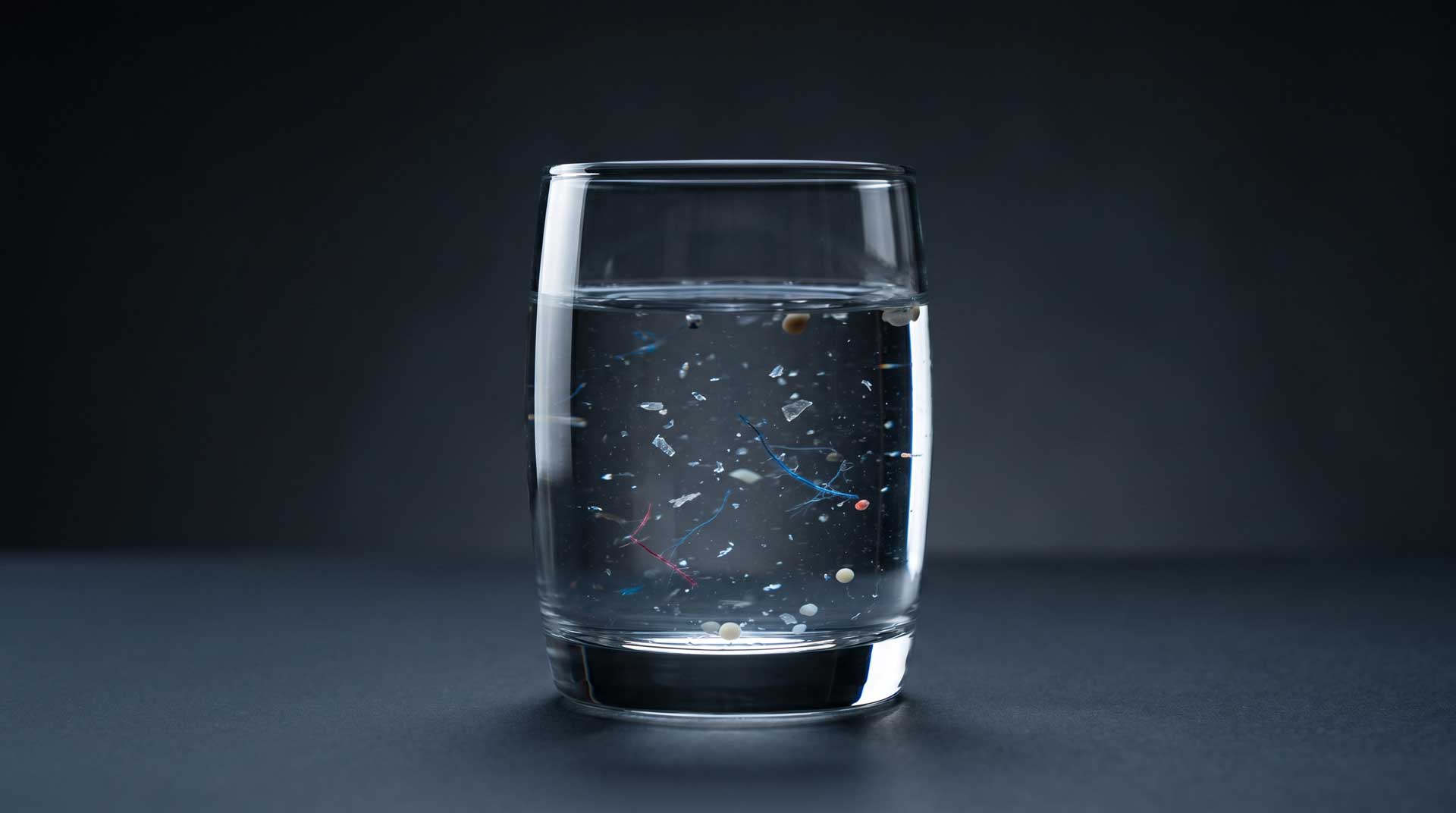
Microplastics. Tiny plastic particles have been found in both tap and bottled water. There’s no federal limit yet and the science on health effects is still developing, but most people would rather not drink them.
Bacteria, Sediment and the Problem With Still Water
Water that moves stays fresher. Water that sits in a building’s pipes loses its disinfectant, warms to room temperature and gives bacteria time to grow. Offices with hybrid schedules, long weekends and rarely used floors create exactly those conditions.
Legionella is the best-known example. It grows in warm, stagnant building water and spreads when people breathe in mist from showers, faucets, cooling towers or decorative fountains. Virginia reported 155 legionellosis cases through the end of November 2024, according to provisional CDC data. The bacteria thrive where building water isn’t kept moving, clean or at the right temperature.
Other microbes, including coliform bacteria, can also take hold in places people overlook:
- Water coolers and jug dispensers, where an open reservoir and a bottle handled by many people invite contamination
- Ice machines that miss their cleaning schedule
- Faucet aerators and old filters, which trap sediment and grow biofilm
Sediment, rust and scale matter too. Beyond looking unappealing, they give bacteria a place to settle and can clog equipment.
How to Protect Your Team’s Water
Most of these contaminants enter in the last few hundred feet, so the most effective fix is treatment at the point of use.
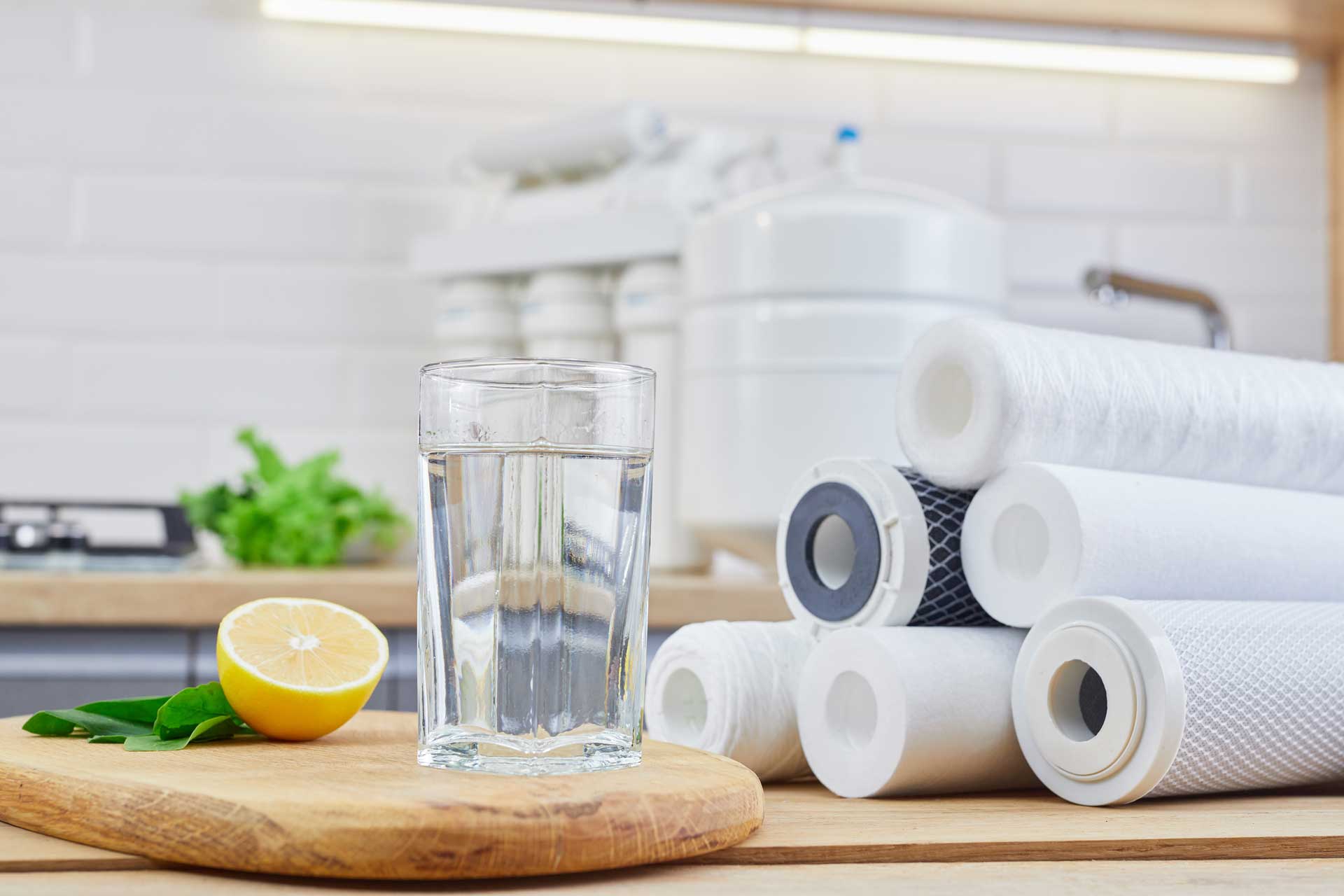
Not all treatment is equal. A basic carbon filter improves taste and reduces chlorine, but it won’t reliably remove dissolved metals, nitrates or salts. Reverse osmosis goes further. Pressure pushes water through a semipermeable membrane with pores small enough to block dissolved contaminants, while pre-filters and post-filters handle sediment, chlorine and taste. A multi-stage system addresses nearly every group above:

The dispenser matters as much as the filter. A system that stores purified water in an open, unmonitored reservoir can undo the work of the membrane. That’s why our Pure Water bottleless systems connect to your existing water line, purify on the spot with multi-stage reverse osmosis and protect the water after it’s purified. Models like the touchless PW90 add activated-oxygen self-cleaning, an antimicrobial surface and 24/7 monitoring that alerts you when service is needed. No jugs, no open reservoirs, no guesswork.
Want to know what’s coming out of your office tap today? Try a system for free or give our team a call. We serve Virginia, Washington DC, Maryland and the Richmond area, and we can install systems nationwide.
Frequently Asked Questions
If our water meets EPA standards, is it contaminant-free?
No. Meeting EPA standards means contaminants are below legal limits, usually measured as averages at the utility’s sampling points. Your building’s pipes and fixtures can add metals or bacteria after that point, and some contaminants, including many PFAS and microplastics, have no federal limit at all.
Will a pitcher or refrigerator filter remove these contaminants?
Some, not all. Most pitcher and fridge filters use carbon, which improves taste and reduces chlorine, and some are certified for lead. Few reduce nitrates, dissolved salts or a wide range of PFAS, and they only work when cartridges are changed on time. Check the NSF/ANSI certification for the specific contaminant you’re worried about.
How often should a workplace test its drinking water?
Most private workplaces aren’t required to test water that comes from a public utility. It’s smart to test when you move into a building, after plumbing work or renovations, after long closures, and whenever people notice a change in taste, color or smell. Use a state-certified laboratory and sample from the outlets people drink from.
About Pure Water Resources
Pure Water Resources provides bottleless drinking water systems for workplaces. Our water systems connect to your existing water line and purify on the spot with multi-stage reverse osmosis, so there are no jugs to deliver, store or lift. We also offer ice and coffee solutions. Headquartered in Dulles, Virginia, we serve more than 2,500 customers across Virginia, Washington DC, Maryland and the Richmond area, and we can install systems nationwide.